
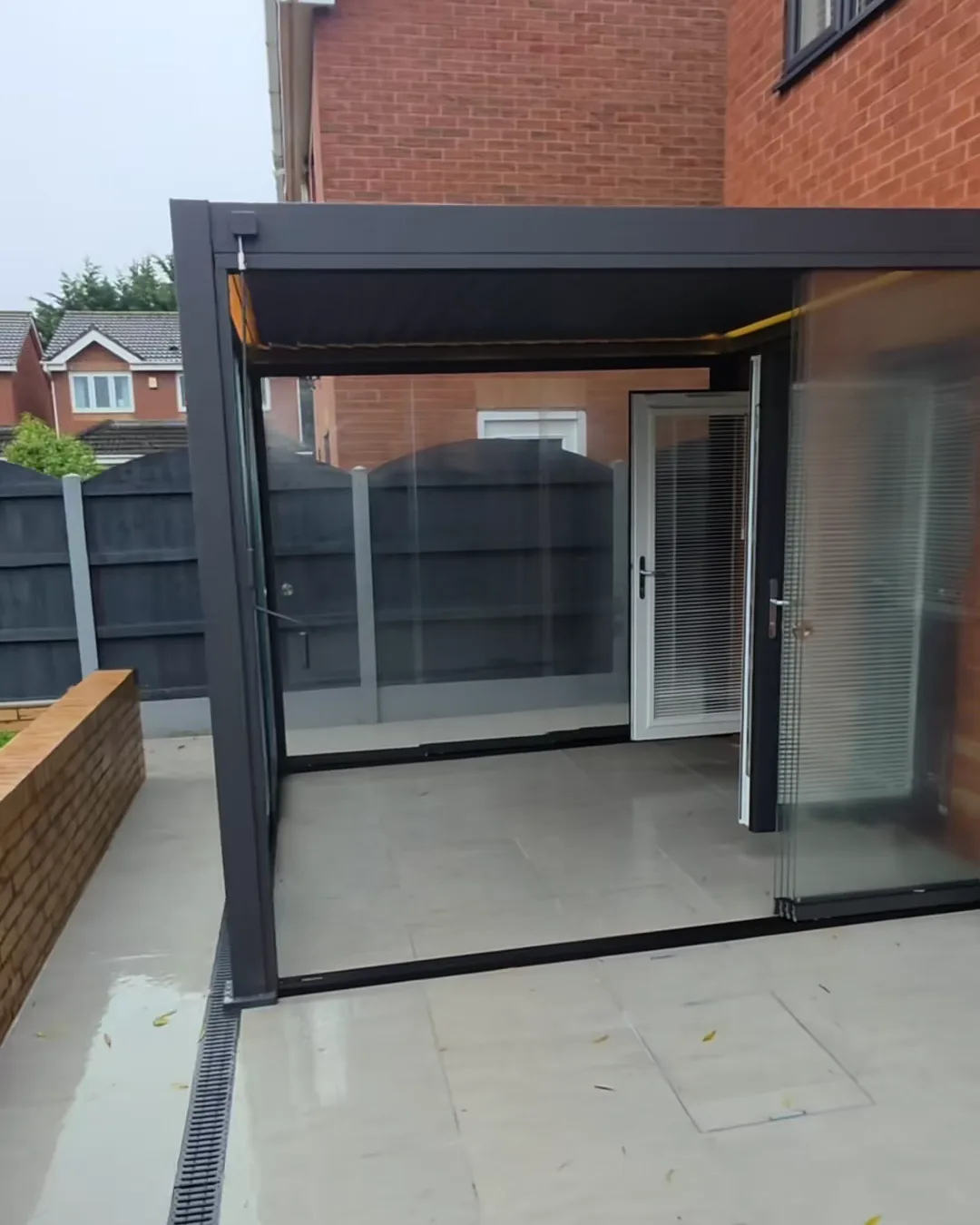
Outdoor kitchens are one of the biggest garden trends in Britain. How to plan cooking, dining and relaxing zones, where shelter fits, and how to keep the grill safe.
Not long ago, cooking outside meant wheeling a barbecue out of the shed on the one sunny Saturday in July. That picture is changing. Across Britain, more homeowners are planning gardens around food: a proper place to prep, cook, eat and then sit back afterwards. The outdoor kitchen has moved from a luxury idea to one of the clearest garden trends of the last two years.
This guide looks at what is driving the trend, why it works so well in British gardens, and how to plan one that you will actually use, including where shelter fits and where it should not.
What the numbers say
The interest is real, and it shows up in both surveys and searches.
- In research by Thompson's reported by NationalWorld in July 2026, nine in ten people surveyed said they prefer to dine al fresco in the warmer months. Over half (54.55%) said they would like an outdoor kitchen. Barbecues were the most commonly owned cooking kit (84.6%), and 27.4% already owned a pizza oven, which the research described as a shift towards a Mediterranean style of summer cooking.
- The same research found that nearly six in ten (59.42%) said their outdoor space wasn't actually ready for use and needed sprucing up after the winter.
- Data collated by LSBUD and reported by Homes Ad-Hoc found that UK searches for "outdoor kitchen" hit a five-year high in 2025, at 18,100, which was 3,300 more than the year before. "How much does it cost to build an outdoor kitchen?" ranked fifth among UK Google queries in July 2025.
In short, lots of people want to cook and eat outside, but many gardens aren't set up for it yet. That gap is where good planning makes the difference.
Why the trend works
It turns the garden into a room you use. A patio with a table is somewhere you sit occasionally. A space with a cooking area, a dining table and somewhere comfortable to relax becomes part of how the household lives, especially on long evenings.
It keeps the cook in the conversation. Anyone who has stood at a barbecue in a far corner of the garden while everyone else chats on the patio knows the problem. Planning cooking and dining as neighbouring zones means the person cooking is part of the gathering.
It suits the way people entertain now. Pizza ovens, sharing platters and long relaxed meals all work better outside, with space to spread out.
It adds value to the time you already spend at home. Instead of a garden that is only used on the hottest days, a well-planned cooking and dining area gives you a reason to step outside far more often.
Ideas you can take from it
1. Plan in zones, not one big patio
The most useful idea behind the trend is zoning. Think of three areas:
- Cooking: the grill, pizza oven or both, with a worktop for prep and somewhere to put plates down.
- Dining: a table big enough for the people you usually feed, ideally close to the cooking zone but not on top of it.
- Relaxing: comfortable seating for after the meal, where you can linger as the light fades.
Even a modest garden can usually fit all three if the layout is thought through. Changes of surface, planters or a low wall can mark where one zone ends and the next begins.
2. Put the cooking in the right place
Safety advice from the fire services is clear, and it should shape your layout from the start. GOV.UK's outdoor fire safety guidance says never to use a barbecue indoors, in a tent, under an awning or in a caravan, and to keep it well away from sheds, fences, trees, shrubs and garden waste. The London Fire Brigade advises placing a barbecue on level ground (not decking), never lighting one in an enclosed space, and keeping a bucket of water or sand nearby.
So the grill and pizza oven belong in the open, on a solid, level, non-flammable surface, away from the house and any structure. Always follow the manufacturer's instructions for your cooking equipment, too. The covered part of the garden is for eating, prepping and relaxing, not for the flames.
3. Keep the walk to the house short
Every trip indoors for a plate, a sauce or a knife pulls the cook away. Placing the dining zone near the back door or patio doors keeps the indoor kitchen within easy reach, and makes it simple to carry food in and out.
4. Grow herbs where you cook
The RHS suggests ideas such as a herb wheel planter placed near the barbecue, or a ladder or shelves of pots planted with herbs like rosemary, basil and thyme near an outdoor cooking area. A few pots of herbs within arm's reach add scent, greenery and flavour, and soften the hard edges of a cooking zone.
5. Light it for the evenings
Meals outside often run past sunset, particularly in spring and autumn. Plan lighting over the dining table and gentle lighting around the relaxing zone, so the space still works when it gets dark.
6. Fix the basics first
With so many people saying their garden needs sorting out before it is usable, it is worth starting with the groundwork: a level, solid patio, decent drainage, and a clear route between the house and the cooking area. The fancy kit can come later.
Where a louvred roof pergola or veranda fits
British weather is the main reason outdoor meals get cancelled. A shower rolls in, or the sun is too strong at midday, and everyone heads back indoors. Shelter over the dining and relaxing zones is what turns an outdoor kitchen from a summer-only idea into a space you can use across more of the year.
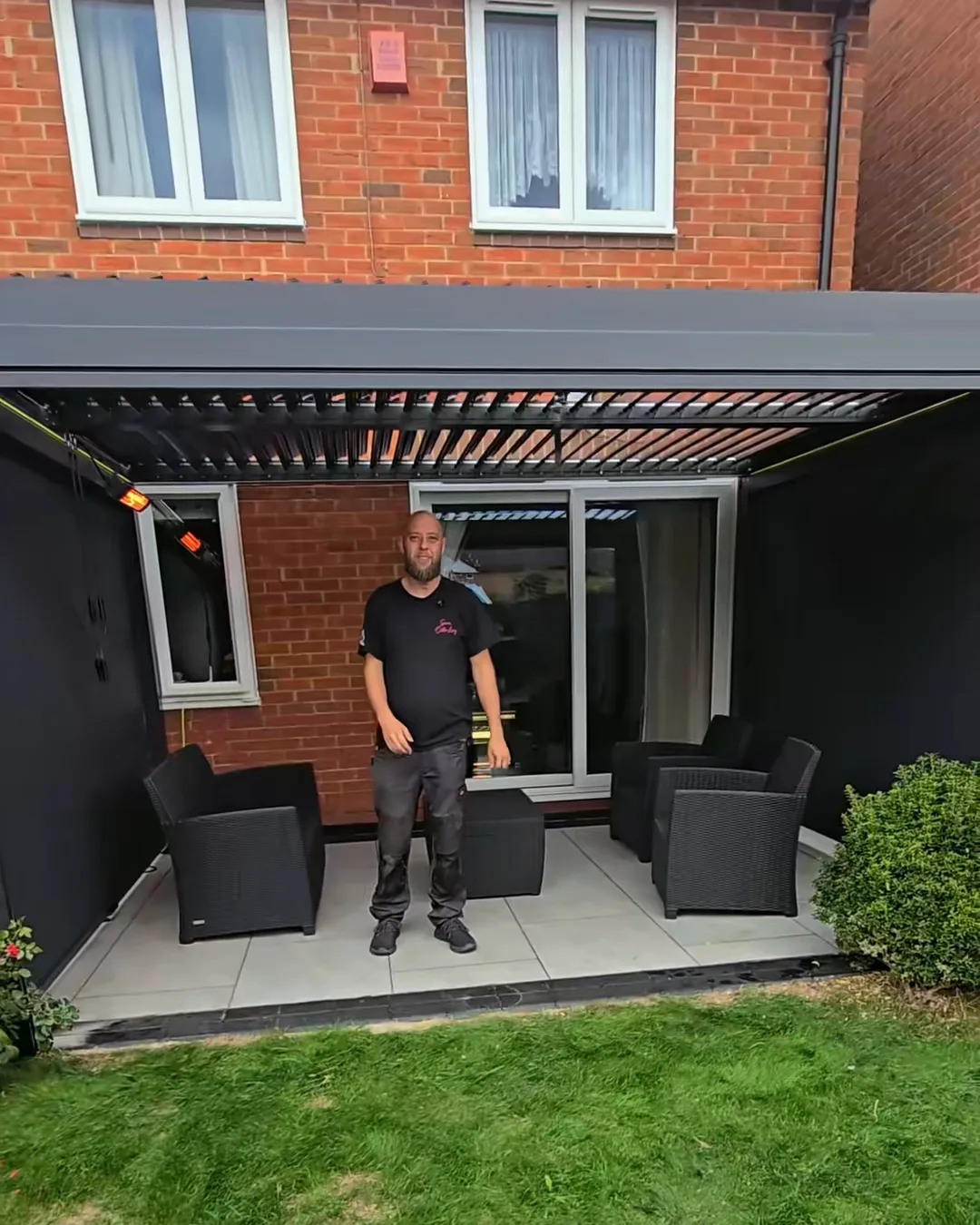
A louvred roof pergola suits this kind of garden well. Open the louvres for sunshine and an open-air feel on a fine evening. Angle them for shade when the sun is strong. Close them when a shower passes over, so the meal can carry on. Add lighting or heaters and the dining area stays comfortable as the evening cools.
The key is placement. Put the pergola over the dining and relaxing zones, with the grill or pizza oven set out in the open nearby, following the fire safety advice above. That way the cook is still only a few steps from the table, and everyone else sits under cover.
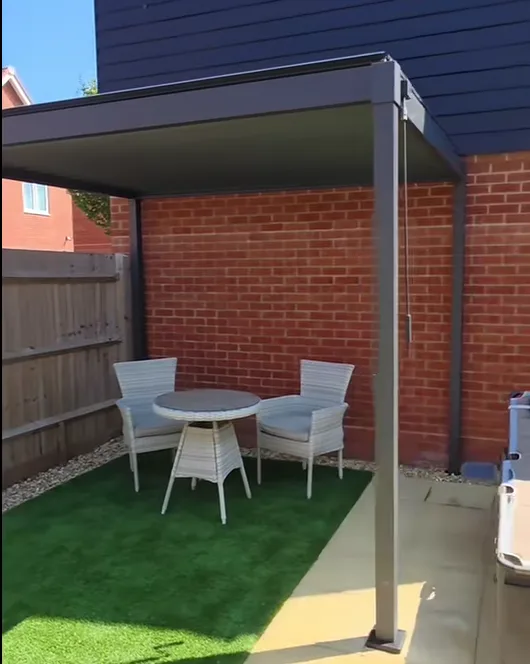
If you want a sheltered link straight off the house, a veranda is another option. It extends the living space out from the back doors, which works well for a dining area right next to the indoor kitchen.
You can explore our pergolas, try different sizes and layouts in the veranda configurator, or book a home survey so a member of the team can look at your garden and talk through where cooking, dining and shelter would work best. Our own installation team installs pergolas and verandas across England, Wales and Scotland.
Frequently asked questions
Can I put a barbecue under a pergola?
No, not under the covered area. GOV.UK fire safety guidance says never to use a barbecue under an awning, and fire services advise keeping barbecues well away from structures. Keep the grill in the open nearby and use the pergola for dining and relaxing.
How much space do I need for an outdoor kitchen?
There is no fixed size. What matters is room for three zones: a cooking spot in the open, a dining table for the people you usually feed, and somewhere to relax. Even modest gardens can often fit a compact version of each with careful layout.
Is an outdoor kitchen worth it in the UK climate?
It can be, if you plan for the weather. Shelter over the dining area, good lighting and a solid, level patio make the space usable well beyond the hottest days.
What should I plan first?
Start with the layout and the groundwork: where each zone goes, a level patio, drainage and a short route to the house. Choose the cooking equipment and shelter around that plan.
Sources
Ready when you are
Planning a pergola or veranda?
Based in Wolverhampton, we install pergolas and verandas across England, Wales and Scotland. Book a survey or call our team to talk through your space.