
What Sarah Eberle’s RHS Chelsea Garden of the Year 2026 teaches UK homeowners: native planting, still water, reclaimed stone and a covered spot to enjoy it all year.
In May 2026, Sarah Eberle won RHS Chelsea Garden of the Year for The Campaign to Protect Rural England Garden: ‘On the Edge’. According to the RHS, the win took her Chelsea gold medal tally to 14 and her ‘Best In’ category wins to four, making her the most decorated garden designer in Chelsea history. Gardens Illustrated notes that she came out of Chelsea retirement for it, having last designed a show garden in 2022, and that 2026 marks her 50th year in horticulture.
It was not a glossy, high-maintenance garden. It celebrated something most of us walk past every day: the scruffy, overlooked countryside on the edge of towns and cities. That is exactly why it is worth a closer look if you are planning your own garden for next year.
What Sarah Eberle’s garden did
The garden was built around the idea of “edgelands”, the fringes of land between town and countryside. The RHS describes them as often overlooked but vital green spaces that connect people to nature.
Gardens Illustrated describes the layout as a community plot on the fringe of a town:
- A fallen tree carved into a sleeping woman, a piece of land art representing Mother Nature, with a shallow pool in front of her face and willow branches for hair.
- A dry-stone wall that blends into the wood of the tree, snakes to the end of the garden and finishes in a semicircular wall with boulders to sit on.
- A small, glade-like gathering space, where an old farmer’s trough overflowing with water creates a planting area for damp-loving plants.
- Native plants and wildflowers that are often dismissed as weeds, plus “fly-tipped” garden plants that have wandered in. Sarah picked out buttercups, hazel and hawthorn, calling it “the beauty in the ordinary”.
The judges loved the atmosphere. Chris Bailes, chair of the judging panel, said the garden “combines elements of myth and remarkable theatre” and highlighted a concrete drain “repurposed from an agricultural accessory into a mesmerising water feature using common duckweed” (RHS). The Guardian described still pools and soft fronds of grass and wildflowers around the giant figure.
The garden also has a life after the show. It is being relocated to Park Hill in Sheffield, a regenerated housing development, where it will be looked after and allowed to thrive (RHS).
Why this approach works
Sarah summed it up herself: “The difference between a good garden and a great garden is how it makes you feel” (RHS). Her garden worked on feeling rather than perfection, and there are three practical lessons in that for an ordinary back garden:
- Familiar plants feel right. Native and everyday plants look at home in a British garden because they are part of the landscape around us. They don’t need to be exotic to be beautiful.
- A little wildness goes a long way. The judges praised a natural planting style that brings “wildness into a garden space with elegance and light touch”. The trick is contrast: loose planting next to something solid and deliberate, such as stone, timber or a clean structure.
- Reuse tells a story. A farmer’s trough and an old concrete drain became the most talked-about features. Reclaimed pieces give a garden character that new materials can’t.
Ideas you can borrow for a UK garden
You don’t need a carved tree or a Chelsea budget. Here are some down-to-earth ways to bring the same spirit home:
Let one area go a bit wild
Pick a border or a strip at the end of the lawn and plant it with natives and wildflowers instead of bedding. Hawthorn and hazel make good informal hedging in many gardens, and leaving some buttercups or clover in the lawn is the easiest start of all. Keep the rest of the garden tidy so the wild patch looks intentional.
Add still, shallow water
A shallow pool or an old trough filled with water is a calm focal point and brings in wildlife. Sarah used a reclaimed trough and a repurposed drain. Look for a galvanised or stone trough at a reclamation yard and plant damp-loving plants around it. If you have young children, keep any water very shallow or covered.
Use stone and boulders as seating
The semicircular wall with boulders for sitting on is a lovely idea for a smaller garden. A low wall or a couple of flat-topped boulders around a gathering spot doubles as seating and edging, with no furniture to store over winter.
Make a gathering space
At the heart of ‘On the Edge’ is a glade-like spot to meet. In a home garden, that is usually the patio or decking nearest the house: the place you actually sit, eat and talk. Give it a sense of enclosure and it instantly feels like a destination rather than a thoroughfare.
Where a louvred roof pergola or veranda fits
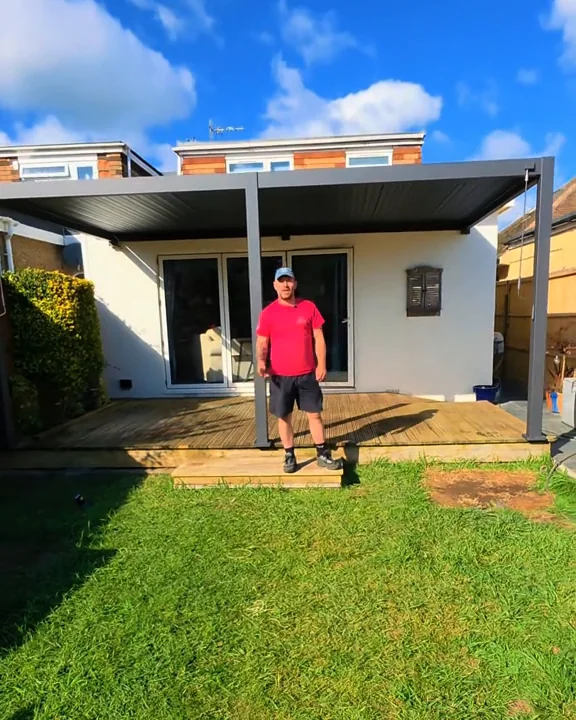
A naturalistic garden looks best when it has a calm, structured frame to look out from. That’s where a covered seating area earns its place. A louvred roof pergola over the patio or decking turns your gathering space into a proper outdoor room, with clean lines that set off loose, wild planting rather than competing with it.
The louvres are the useful part in a British climate. Open them on a bright day to let light and air through, and close them when a shower rolls in, so you can keep sitting out and watching the garden instead of retreating indoors. In autumn and winter, a covered spot is often the only way you’ll enjoy a wild garden at its most atmospheric: seedheads, frost on the grasses and birds on the hawthorn berries.
A few tips for pairing a structure with naturalistic planting:
- Keep the structure simple and dark or neutral so the planting does the talking.
- Plant right up to the edges of the patio or decking with grasses, natives and shrubs to soften the posts.
- Position it to face the wildest view, so the best part of the garden is what you see from your seat.
- If you want it attached to the house, a veranda gives the same covered link between indoors and out. You can design one with our veranda configurator.
We’re based in Wolverhampton and supply and install pergolas and verandas across England, Wales and Scotland with our own in-house installation teams. Explore our louvred roof pergolas or book a home survey and we’ll help you work out the right size and position for your garden.
FAQ
Who won RHS Chelsea Garden of the Year 2026?
Sarah Eberle won with The Campaign to Protect Rural England Garden: ‘On the Edge’. It brought her Chelsea gold medals to 14 and made her the most decorated garden designer in Chelsea history, according to the RHS.
What is an edgelands garden?
It is a garden inspired by the overlooked countryside on the edge of towns and cities. Expect native plants, wildflowers often seen as weeds, reclaimed materials, dry-stone walls and still water.
Can I create a wild-style garden in a small UK garden?
Yes. Choose one border or corner for native planting, add a trough or shallow pool, and use a low wall or boulders as seating. Keep the rest neat so the wild area looks deliberate.
Does a pergola suit a naturalistic garden?
Yes. A simple louvred roof pergola gives you a covered place to sit and enjoy the planting in all weathers, and its clean lines contrast well with loose, wild planting.
Ready when you are
Planning a pergola or veranda?
Based in Wolverhampton, we install pergolas and verandas across England, Wales and Scotland. Book a survey or call our team to talk through your space.