
After the UK’s warmest summer on record, shade is becoming a garden must-have. Ideas from RHS Badminton 2026 and how a louvred roof pergola gives shade on demand.
For years the goal in a British garden was simple: find the sunniest spot and put the patio there. That is starting to change. After the warmest UK summer on record in 2025, more homeowners are asking a different question: where can we sit when it’s too hot? Shade has become a design feature in its own right, and the best answer is often a structure that gives you shade when you want it and sunshine when you don’t.
What’s driving the shade trend
The numbers are hard to ignore. Provisional Met Office statistics confirmed that summer 2025 was the warmest on record for the UK, with a mean temperature of 16.10°C from 1 June to 31 August. That beat the previous record of 15.76°C set in 2018. England had its warmest June on record, and the Met Office’s analysis found that a summer as hot as 2025 is now 70 times more likely than it would be without human-caused greenhouse gas emissions (Met Office).
Gardeners have noticed. The RHS’s predictions for 2026 opened with the line that “climate change will be the main driver of activity in the garden”, with gardening becoming more purposeful: “supporting wildlife, managing water and weather and making the most of changing conditions” (RHS).
Then, at RHS Badminton Flower Show 2026, the RHS put the idea plainly: “In previous years, we craved sunny patios where we could soak up the sunshine. With climate predictions suggesting things will get even hotter, many of us are looking for ways to create cooler, shaded areas” (RHS).
Homeowners’ wish lists point the same way. In a survey of 1,000 UK homeowners with gardens, reported by InsightDIY, 26% said they would include a pergola or covered seating area in their dream garden, 39% wanted outdoor lighting and 36% wanted a patio or dedicated outdoor dining area. Searches tell a similar story. Data collated by LSBUD and reported by Homes Ad-Hoc found that Google searches for “pergola” reached a four-year peak in summer 2025, with over 90,500 searches in June alone, up from 74,000 in 2024.
How the show gardens created shade
The RHS round-up of shade ideas from the Badminton show gardens is a useful checklist, because it covers everything from a £30 screen to a permanent structure (RHS):
- Pergolas. A pergola with climbing roses was the central focus of the Honing Heritage Garden, and a steel pergola gave dappled shade on Silo: All that comes in remains. The RHS notes that steel structures “tend to be more expensive but last longer and provide a strong architectural feature in the garden”.
- Bespoke timber in awkward corners. A wooden pergola on A Space for Her made the most of a tricky space.
- Simple woven screens. Willow or bamboo screens hung between posts, as on the Electuary garden, give gentle shade for around £30.
- Shade sails. A woven sail featured on the Ruskin Mill Trust garden. The RHS advises fastening them securely and taking them down when strong winds are forecast.
- Trees. Multi-stemmed trees, crown-lifted trees over seating, and rows of smaller trees for dappled shade.
- Covered porches. The Cricket Pavilion Garden showed how a roofed porch makes a naturally shady spot.
- Water. Even a simple bowl water feature helps the garden feel cooler and gives wildlife a drink.
Rachael Austin, designer of the Ruskin Mill Trust garden, summed up the thinking behind it: “With heatwaves becoming the norm, we want to show people that woodland and tree shade is the perfect, accessible place to cool down.”
Why this approach works
Shade isn’t just about comfort on the hottest afternoon of the year. It works because it makes the garden usable more often:
- You can stay outside at midday. A shaded table means lunch outdoors instead of retreating indoors when the sun is at its strongest.
- It protects people, pets and furniture. Cushions, rattan and timber last longer out of strong sun.
- It creates a “room”. A roof overhead, even a light one, gives a sense of enclosure that makes a spot feel like somewhere you go, not just somewhere you pass through.
- It works in both directions. The same structure that gives shade in July can keep a shower off in October, especially if you add side screens, lighting or heating.
Ideas you can use in your own garden
You don’t need a show budget. Here are practical ways to bring the shade trend home:
1. Watch the sun before you build. Spend a day noting where the sun falls at lunchtime and early evening. Put your shaded seating where you actually want to be at the hottest part of the day, not automatically where the patio already is. 2. Plant for the long term. As the RHS says, “gardens start and end with plants”. A multi-stemmed tree or a climber trained over a structure gives softer shade and supports wildlife. If you have mature trees, get professional advice before any drastic pruning. 3. Layer your shade. Combine a fixed structure with planting, a screen or a parasol so you can adjust through the day. 4. Add water. A small bowl or trough feature brings movement and sound and helps the space feel cooler. 5. Think about evenings too. Outdoor lighting and a heater turn a summer shade spot into somewhere you can use on cooler nights. 6. Plan for rain. With wetter spells as well as hotter ones, think about where the water off any roof will go. A water butt on the downpipe gives you free water for pots in dry weather.
Where a louvred roof pergola or veranda fits
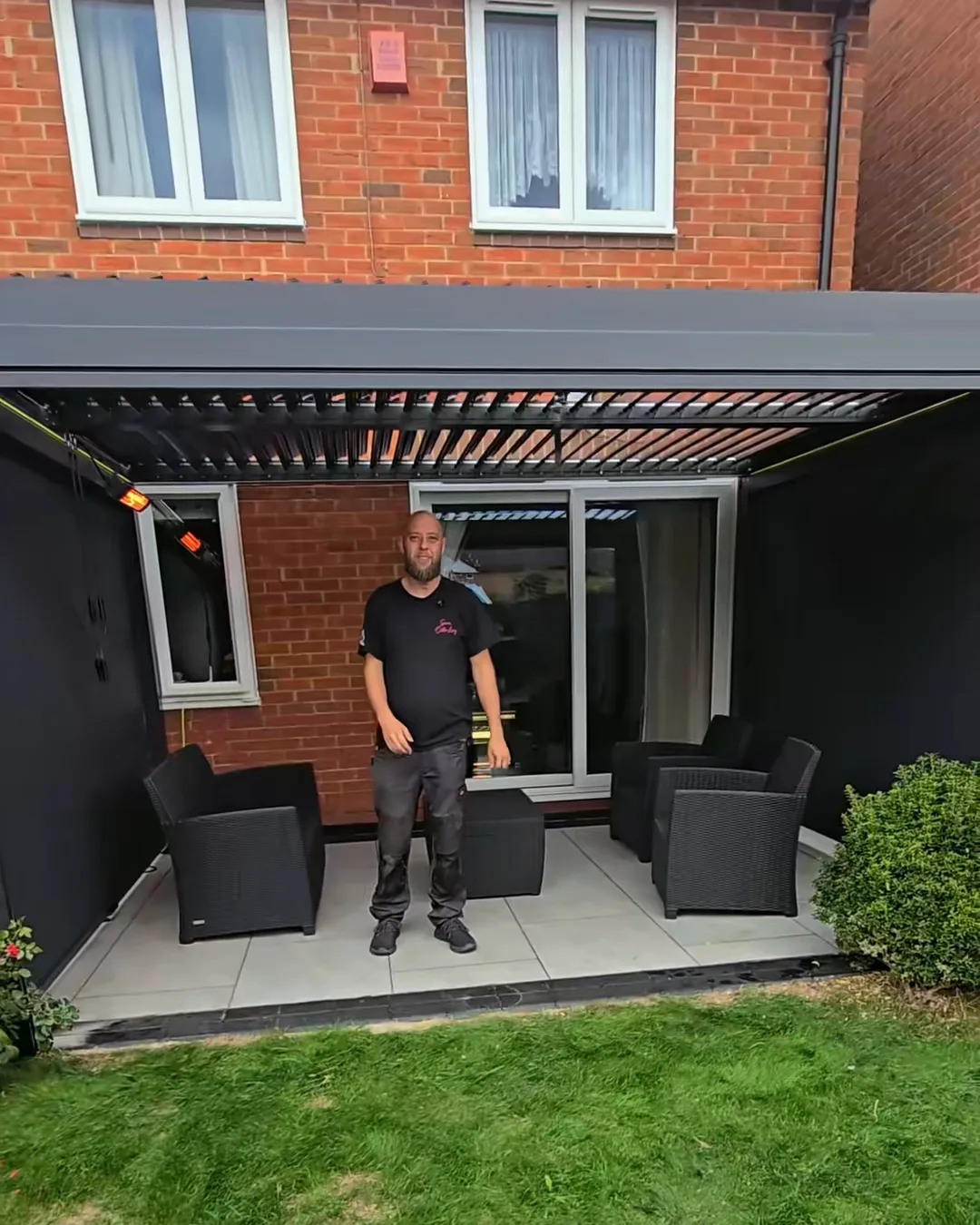
A louvred roof pergola is built for exactly this kind of changeable weather. The roof is made of adjustable louvres: angle them to let dappled light through on a mild day, open them fully when you want the sun, and close them to make a solid roof for full shade or when a shower comes over. It gives you the “sunny patio” and the “shady retreat” in one place.
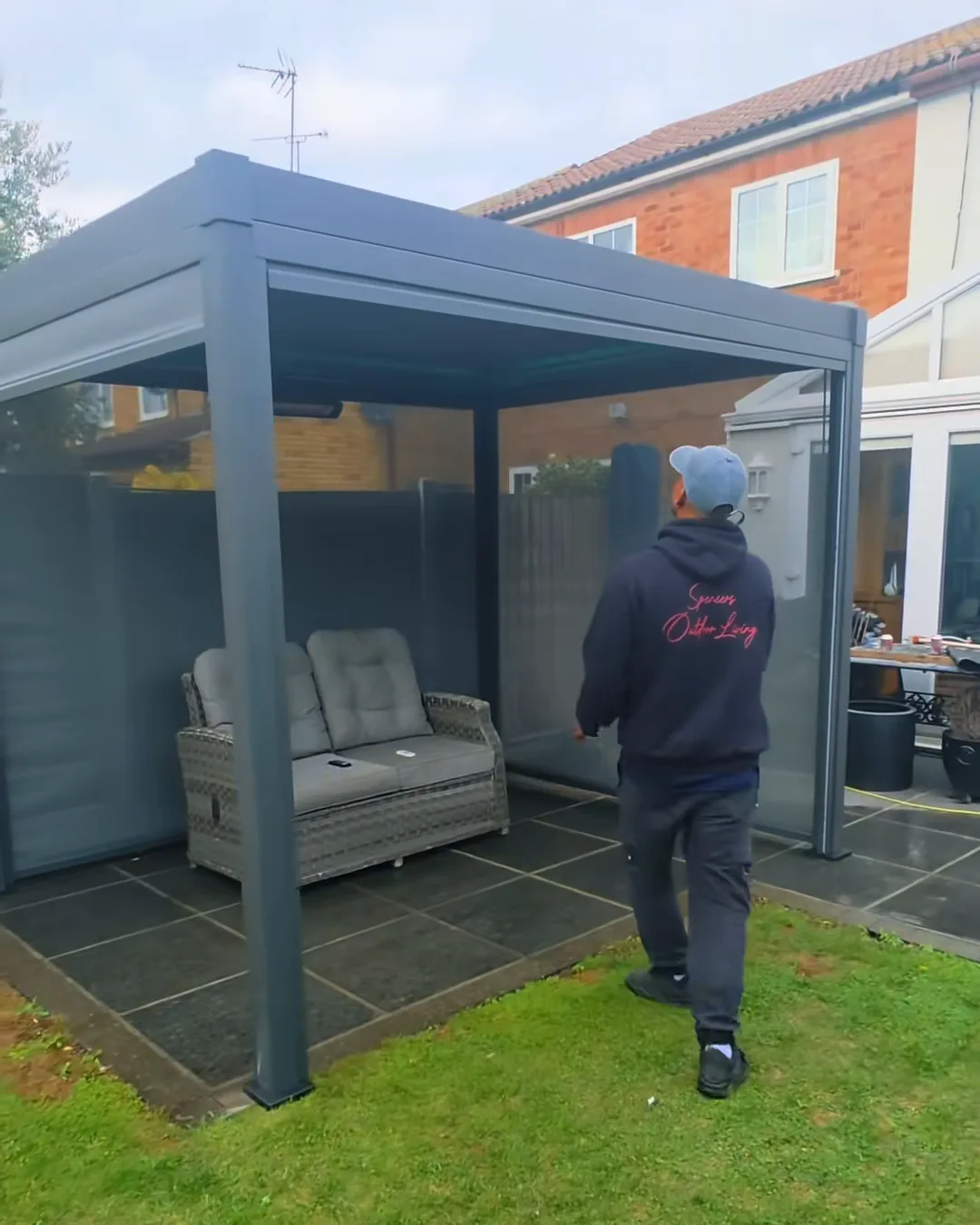
The RHS point about steel and other metal structures lasting longer applies here too. When you’re planning one:
- Add-ons such as side blinds, LED lighting and heaters make the space work beyond high summer.
If you’d rather have shade right against the house, so you can step straight out from the kitchen or lounge, a veranda creates a covered link between indoors and out. You can try layouts in our veranda configurator.
We’re based in Wolverhampton, and our own installation teams supply and install every pergola and veranda we sell. Explore our louvred roof pergolas, or book a home survey and we’ll help you work out the right size and position for shade in your garden.
FAQ
Is a pergola good for shade?
Yes. The RHS lists pergolas among its main ideas for creating shade in a garden. A louvred roof pergola lets you adjust how much shade you get by changing the angle of the louvres, and closes fully for complete cover.
Was summer 2025 really the hottest on record in the UK?
Yes. Provisional Met Office statistics show summer 2025 was the UK’s warmest on record, with a mean temperature of 16.10°C, beating the previous record of 15.76°C set in 2018.
What’s the cheapest way to create shade in a garden?
The RHS suggests willow or bamboo screens hung between posts, which cost around £30, or a shade sail fixed securely and taken down in strong winds. For permanent shade, trees and climbers are a long-term investment.
Can a louvred roof pergola be used outside summer?
Yes. With the louvres closed it keeps rain off, and adding side blinds, LED lighting or heaters makes it comfortable on cooler evenings in spring and autumn.
Ready when you are
Planning a pergola or veranda?
Based in Wolverhampton, we install pergolas and verandas across England, Wales and Scotland. Book a survey or call our team to talk through your space.